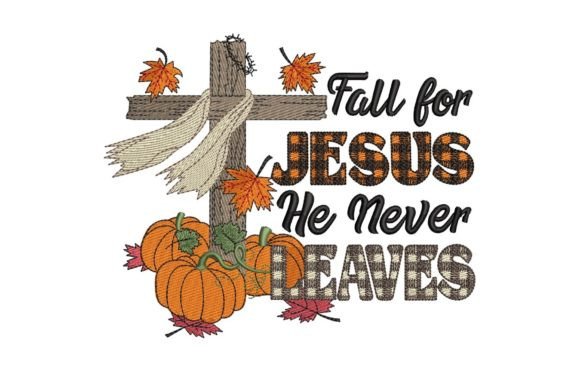
Fall for Jesus He Never Leaves: A Designer's Hands-On Review
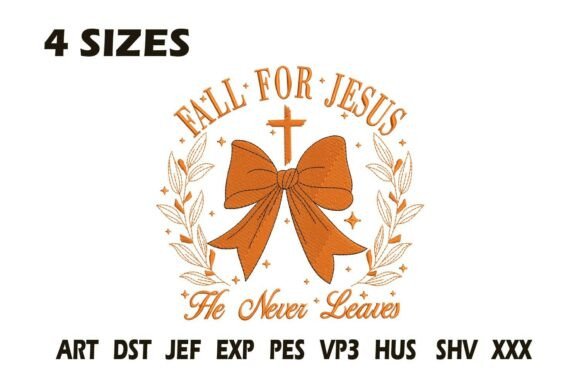
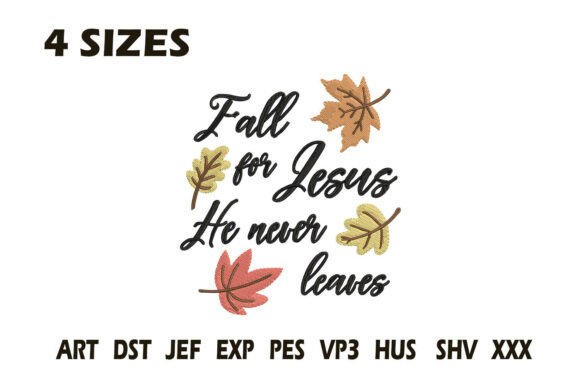
When I first opened the Fall for Jesus He Never Leaves machine embroidery design, I was struck by how directly it speaks to the season. There is a quiet warmth in the layout that immediately felt right for autumn projects. The lettering carries a steady, unhurried rhythm. The phrase itself is the kind of message that lands gently but stays with you. As someone who has stitched hundreds of machine embroidery designs for clients and my own small shop, I have learned to trust that first visual impression. This one promised a finished product that feels personal, not promotional.
First Look: Mood, Shape, and Visual Personality
The design moves with a balanced silhouette. The words are arranged so the eye travels naturally from Fall for Jesus down to He Never Leaves. It does not feel crowded or scattered. The stitch density appears moderate, which tells me it will hold up well on custom apparel and handmade products without puckering or distorting the fabric. The mood is reflective, cozy, and reassuring. This is not a loud design. It belongs on pieces people reach for on cool mornings, items that feel like comfort.
I immediately thought of a sweatshirt embroidery project. A cream or heather gray crewneck with this design in a warm rust orange thread would look like something you would keep for years. The same would go for a sturdy tote bag design made for carrying library books, farm market finds, or a Bible study notebook. The design feels like it was made for fabric that gets touched and used often.
Because the theme references autumn and gratitude naturally, it fits well with Thanksgiving projects without screaming holiday. That matters to me as a designer. I want pieces my customers can wear through October and November and still feel appropriate in December. This design lives comfortably in that longer seasonal window.
Real Project Scenario: The Tote Bag Test
I decided to test Fall for Jesus He Never Leaves on a midweight canvas tote bag. This is a product I sell frequently at craft fairs and through my Etsy shop. Customers love a tote that feels sturdy but personal. I hooped the bag with a tear-away stabilizer and used a medium-weight cutaway behind the embroidery file area to keep the stitches crisp. The design stitched out cleanly. The satin stitch elements in the lettering laid down smoothly with no gaps or pulls.
I tested it first on a scrap piece of the same canvas with a dark thread color against a natural cotton background. The contrast was excellent. The words read clearly from several feet away, which is important for a craft business item that will be carried around in public. I then stitched a second version on a lightweight flannel shirt for a custom order. That required a lighter stabilizer and a careful hoop to avoid shifting, but the design adapted well. The fill stitch areas did not overpower the thinner fabric.
If you are planning to use this design on baby embroidery items like a receiving blanket or a onesie, I would recommend a smaller hoop and a soft cutaway stabilizer. The design is not overly dense, so it should feel soft against a baby's skin. That is a detail new parents notice and appreciate when they receive a personalized gift.
Where This Design Works Best
I have mentally placed this design across a range of projects, and it keeps surprising me with its versatility. Here is where I see it performing at its best:
- Custom apparel such as crewneck sweatshirts, long-sleeve tees, and cardigans. The design sits well on the chest or slightly off-center on the back.
- Embroidered patch projects. The design would translate nicely into a standalone patch for a jacket or a backpack, especially if you use a dense satin stitch border.
- Pillow covers and throw blankets. This design adds a handmade, intentional feel to home decor items that are often given as gifts.
- Holiday embroidery gifts for church groups, small group leaders, or family members who value faith-based messages.
- Commercial embroidery orders for boutiques or small shops that want to offer seasonal items with a meaningful touch.
- Printable mockup use for digital product listings. The clean layout photographs well and looks professional in flat lays.
In my experience, designs that work across this many categories are rare. Most digital embroidery files lean too far into a single use case. This one balances readability with emotion, which is exactly what buyers respond to when they are shopping for small shop products.
Where to Use Care and Caution
No design is perfect for every surface, and I always advise looking at potential problem areas before committing to a project. With Fall for Jesus He Never Leaves, there are a few situations where I would slow down and test first.
Small hoop sizes are fine, but do not squeeze the design into a hoop that barely fits. If the hoop is too tight around the edges, the fabric can push back and distort the running stitch outlines. Give yourself at least an inch of clearance on all sides. I learned this the hard way years ago with a similar layout, and it cost me a shirt and my patience.
Textured fabrics like thick fleece or boucle can swallow the detail in the letters. If you are stitching on something fluffy, use a strong stabilizer and consider a slightly larger hoop size to keep the fabric flat. Test on a scrap first. Thin fabric like a lightweight tee or a silky blouse needs a no-show mesh stabilizer to prevent show-through.
Dark fabric backgrounds require careful thread color selection. A dark brown or black shirt will not show a dark thread clearly. I tested this design on a navy blue fabric with a warm gold thread, and it looked beautiful. But I can imagine a customer ordering it on black and then wondering why the letters disappear. Always recommend or test a high-contrast thread combo when the fabric is dark.
Curved surfaces like caps are tricky for any design with multiple lines of text. The arc of a hat can stretch the spacing between the two lines. If you want to use this design on a cap, I would suggest a custom resize that brings the lines closer together and tests the curve on a practice hat before stitching the final product.
Dense stitch areas are not a concern here, but I always note that any design with multiple small details needs checking after the first stitch-out. Look for any letters that may have pulled tight or any thread breaks in the fill stitch. If you see a problem, adjust the tension or the stabilizer before stitching more.
Frequent washing can wear down any embroidery. For items like kitchen towels or baby blankets that will be laundered often, use a high-quality cutaway stabilizer and trim the excess close to the stitching. The design itself is sturdy enough, but the thread and stabilizer need to match the project's intended use.
How This Design Affects Perceived Value
When a customer sees Fall for Jesus He Never Leaves on a finished product, they are not just seeing letters. They are seeing effort, thoughtfulness, and a message that resonates. That impression increases the perceived value of the item significantly. A plain tote bag becomes a gift. A simple sweatshirt becomes a statement of faith and comfort. For Etsy sellers and small business owners, that shift in perception is exactly what drives repeat buyers and word-of-mouth recommendations.
I have noticed that faith-based designs like this one tend to attract customers who are looking for handmade products that feel authentic. They do not want mass-produced iron-on transfers. They want something that was stitched with care. When you offer a design that stitches cleanly and reads beautifully, you build customer trust and brand consistency. Your shop becomes known for quality, not just slogans.
For apparel decorators and creative entrepreneurs, this design is a solid addition to a seasonal collection. It works for fall markets, church fundraisers, and personalized holiday gifts. I would feel confident putting this in front of a client or listing it in my shop without worrying about stitch-out issues or odd spacing.
Practical Designer Notes Before You Stitch
Before you load this embroidery file into your machine and hit start, here are the steps I recommend every designer take, based on my own routine:
- Test the design on scrap fabric that matches your final project fabric in weight and texture. Do not skip this step. A test stitch-out catches tension problems, thread color mismatches, and hoop issues before they ruin your product.
- Check thread color contrast against the fabric in both natural light and indoor light. Some colors that look good in the store look flat under a desk lamp.
- Review the stitch density and make sure it is appropriate for your fabric. If the fabric is thin, reduce density slightly or add a second layer of stabilizer.
- Confirm the hoop size you plan to use. Do not assume it fits just because the file name says it should. Measure the design dimensions and compare them to your hoop's stitching area.
- Inspect small details like the curves in the lettering. If any area looks too fine for the fabric you have chosen, consider enlarging the design slightly or simplifying the thread path.
- Test the design in a black and white mockup. This helps you see the overall shape and balance without the distraction of color. If it looks good in grayscale, it will look better in thread.
- Compare the design on both light and dark fabric backgrounds. Some designs lose their shape on dark fabric because the thread does not pop. Make sure yours works on both, or at least know which one it favors.
- Use the correct stabilizer for your project. Cutaway for knits and stretchy fabrics. Tear-away for wovens and stable fabrics. Fusible for tricky fabrics like fleece or velvet.
- Confirm licensing before you sell finished items or digital products. Even if you bought the design assets from a trusted source, double-check that commercial use is allowed. Some designers restrict use for mass production or require credit. Know the terms so you do not put your craft business at risk.
- Stitch your final product with care. Use a fresh needle, clean your bobbin area, and watch the first few minutes of stitching to catch any issues early.
Final Verdict for Designers and Shop Owners
Fall for Jesus He Never Leaves is a reliable, well-constructed machine embroidery design that delivers on its promise of adding a cozy feel to fabric projects. It is not trying to be flashy or complicated. It is trying to be clear, steady, and meaningful. That is exactly what I look for when I am choosing embroidery designs for my small shop or for client orders.
If you are a digital product seller who creates printable mockups or sells design assets, this file will photograph well and look professional in your listings. If you are a maker who actually stitches the goods, the design will behave well on a range of fabrics and hoops. And if you are a hobbyist making a personalized gift for someone you care about, this design will help you create something that feels handmade in the best sense of the word.
I plan to use it for a small run of autumn tote bags and a few custom sweatshirts for my Etsy shop. Based on the stitch-out quality and the emotional resonance of the message, I expect those items to sell quickly. That is the kind of confidence a handmade product deserves.