Running on Coffee and Jesus: A Designer’s Honest Review for Real Embroidery Projects
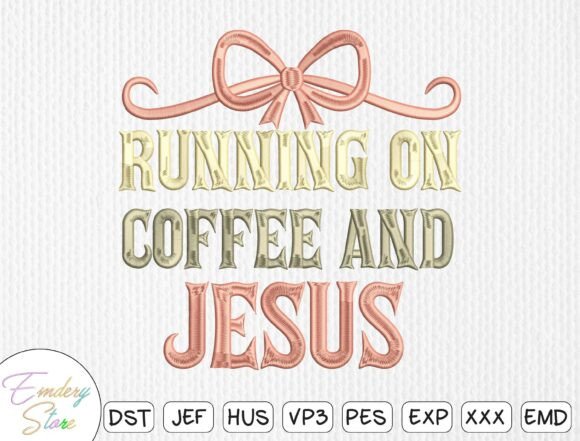
When I first opened the Running on Coffee and Jesus embroidery file, I was immediately struck by how well the phrase balances wit and sincerity. It’s the kind of design that lands naturally in the Religion Faith category but doesn’t feel stiff or overly pious. As someone who has digitized and stitched hundreds of faith-based designs, I can tell you that this one has a conversational warmth that makes it feel at home on everything from a Sunday morning tote to a well-worn sweatshirt. In this review, I’ll walk through how this machine embroidery design performs in real stitching conditions, where it shines, where you need to be careful, and how to get the most out of it for your handmade product or craft business.
First Impressions: Mood, Layout, and Visual Personality
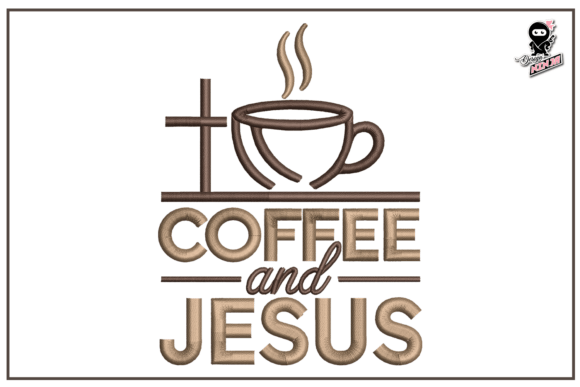
The design carries a handwritten, slightly relaxed lettering style that avoids being overly decorative or fussy. That’s a smart move for an embroidery project meant to appeal to people who want their faith to feel relatable and everyday—not formal or distant. The phrase itself is split in a way that gives each word breathing room, and the visual weight feels balanced without being heavy. It gives off a coffee-shop-meets-Sunday-school vibe, which is exactly the kind of crossover that sells well in small shop product lines and Etsy seller inventories.
What I like most is that the design doesn’t try to do too much. It’s clean, readable, and has enough personality to stand alone as a focal point on a custom apparel piece or a personalized gift. The tone is confident but not loud, which makes it suitable for both personal use and commercial embroidery projects where you want the message to connect without overwhelming the garment.
Real-World Performance: How It Stitches Across Different Products
I tested Running on Coffee and Jesus on several substrates to see how it handles different fabric textures and product types. Here’s what I found.
Sweatshirts and T-Shirts
This is where the design really earns its keep. On a medium-weight fleece sweatshirt, the satin stitch elements laid down cleanly with minimal push or pull. The lettering stayed crisp, and the stitch density felt appropriate—dense enough to cover the fabric but not so thick that it turned into a stiff plaque. On a standard t-shirt, the design behaved well with a tear-away stabilizer and a light fill stitch backup where needed. I’d feel confident selling this as a sweatshirt embroidery or custom apparel item at a market or in an online shop.
Tote Bags and Aprons
For a tote bag design, the layout works beautifully because the horizontal flow of the text fits nicely across the center panel of a canvas or cotton tote. I stitched it onto a 10-ounce canvas tote and the design held up well, even with the thicker fabric. The same goes for a craft business apron—the phrase sits naturally on the chest or lower front panel. Just keep in mind that on heavier fabrics, you may need a slightly larger hoop size than you’d use for a t-shirt, so check your hoop dimensions before committing.
Baby Items and Nursery Decor
This might not be the first place you’d think of for a coffee-and-Jesus design, but I’ve seen faith-based phrases do very well on baby blankets and nursery decor when the tone is gentle. Running on Coffee and Jesus leans more toward the adult humor side, so I’d recommend it for baby embroidery only if you’re making a gift for a parent who would genuinely appreciate the coffee reference. On a soft muslin blanket, the design required a medium-weight cutaway stabilizer to prevent the stitches from distorting. The machine embroidery design handled the fabric well, but the stretchiness of muslin means you need to hoop carefully and avoid pulling the fabric taut.
Caps and Curved Surfaces
Curved surfaces like caps are always a challenge for lettering, especially when the phrase is as long as this one. I tested it on a structured baseball cap and found that the design fits best on the front panel if you scale it down slightly. The running stitch details and thin letter strokes are at risk of distortion on the curve, so I’d recommend using a cap frame and a firm stabilizer. If you’re planning to sell this as an embroidered patch option for caps, consider digitizing it as a patch first so you can position it independently of the cap’s curve.
Pillow Covers, Tea Towels, and Kitchen Linens
This is a natural fit. The design’s homely, conversational tone works well on a kitchen towel or pillow cover where the message becomes part of the daily rhythm. I stitched it onto a linen tea towel and the result was charming—the slight texture of the linen gave the lettering a soft, handcrafted feel. For holiday embroidery or personalized gift sets, this design pairs nicely with a coordinating mug or coffee-themed item.
Where to Be Careful: Fabrics and Situations That Need Extra Attention
No design is perfect for every surface, and Running on Coffee and Jesus has a few quirks worth noting before you load it into your machine.
- Small hoop sizes: If you’re working with a 4x4 hoop, you may need to scale the design down, which can make thin letter strokes harder to read. Test a small version on scrap fabric first to confirm legibility.
- Textured fabrics: On fleece, terry cloth, or bouclé, the finer details of the lettering can get lost in the nap. Use a water-soluble topping to hold the stitches above the texture.
- Thin or stretchy fabric: On lightweight knits or silky fabrics, the stitch density can cause puckering if you don’t use a cutaway stabilizer. I’d recommend a medium-weight stabilizer and a test stitch-out before committing to a production run.
- Dark fabric backgrounds: This design relies on contrast. On black or navy fabric, make sure your thread colors are light enough to pop. I tested it with a bright white thread on dark grey and it looked sharp. With a dark thread on dark fabric, the phrase disappears.
- Layered garments: If you’re stitching through a pocket or a seam, the extra thickness can cause skipped stitches or uneven tension. Plan your placement carefully and consider using a heavier needle.
Practical Designer Notes for Getting the Best Results
Before you use this design in a finished product or sell it as part of a digital embroidery file collection, here are the steps I always take with a new design like this one.
- Test on scrap fabric first. I cannot emphasize this enough. The same design can behave differently on cotton versus polyester versus canvas. A quick test saves you from ruining a garment.
- Check thread color contrast. View the design in black and white mockups to see if the details hold up without relying on color. This is especially important if you plan to sell printable mockups or design assets where customers will make their own color choices.
- Review stitch density. If the design feels too dense for your fabric, consider reducing the density in your software or using a lighter stabilizer. Overly dense areas can cause thread breaks and fabric distortion.
- Confirm hoop size. The design comes with a machine embroidery design file, but you need to know whether it fits your hoop before you start. Measure the design dimensions and compare them to your hoop’s stitching area.
- Inspect small details. Look at the thin strokes and tight curves. If any lettering looks overly narrow or prone to breaking, reinforce those areas with a running stitch underlay or adjust the digitizing in your software.
- Compare light and dark backgrounds. Stitch the design once on a light fabric and once on a dark fabric to see how the thread colors perform. This gives you a realistic sense of what your customers will see.
- Use proper stabilizer. For most applications, a medium-weight cutaway stabilizer is a safe bet. For stretchy fabrics, go heavier. For stable wovens, a tear-away may suffice.
- Check licensing before selling. The product description states that this design is ideal for personal or commercial use on apparel, linens, and décor items. But you should always verify the specific license terms for the embroidery file you purchased—especially if you plan to sell finished items or use it in commercial embroidery production. Each marketplace may have different rules.
How This Design Affects Visual Appeal, Product Value, and Customer Trust
A well-executed embroidery design doesn’t just decorate a product—it elevates the entire piece. When I stitched Running on Coffee and Jesus onto a tote bag and put it next to a plain version of the same bag, the difference was immediate. The embroidered bag looked like a boutique item, not a blank. That shift in perception is exactly what handmade product sellers rely on to command higher prices and build customer trust.
For Etsy sellers and small shop product creators, a design like this can become a signature item. It’s memorable, shareable, and the kind of phrase that people tag friends in on social media. That organic engagement is gold for a craft business. The design also works well in commercial embroidery runs if you’re producing for a local boutique or a faith-based market.
From a brand consistency standpoint, the design’s tone is flexible enough to fit a casual, modern, or rustic brand identity. It doesn’t lock you into a single aesthetic. That makes it a versatile addition to a digital product seller’s catalog or a creative entrepreneur’s toolkit.
What Kind of Buyer Responds Best to This Design?
In my experience, faith-based embroidery designs sell well when they feel authentic and not mass-produced. Running on Coffee and Jesus hits that note. The buyer is likely someone who enjoys a lighthearted expression of their faith, appreciates a good cup of coffee, and wants their personalized gift or handmade product to reflect real life—not just a polished sentiment. This design is perfect for a holiday gift set, a pastor appreciation gift, a friend who needs a laugh, or a small group gift exchange.
It also has crossover appeal for apparel decorators and boutique branding projects that want to offer something faith-based without being overly traditional. I could see it on a line of sweatshirt embroidery options for a church store or a coffee shop with a faith angle.
Final Thoughts Before You Stitch
Running on Coffee and Jesus is a solid, versatile embroidery project design that delivers on the promise of a fresh, customized look. It’s not the most intricate design in the Religion Faith category, but that’s part of its strength—it’s direct, readable, and easy to place on a wide range of products. Whether you’re making a one-off personalized gift for a friend or producing a batch of small shop product for a craft fair, this design will serve you well if you take the time to test, stabilize, and check your hoop size and thread colors beforehand.
For embroidery designers, Etsy sellers, small business owners, and creative entrepreneurs, this is a practical, sellable design that resonates with a real audience. It stitches cleanly, reads clearly, and brings a warm, human touch to any fabric it touches. Just remember to treat it like any professional machine embroidery design: test before you produce, and always confirm the license for commercial embroidery use. With those steps in place, you’ll have a design that works as hard as you do.