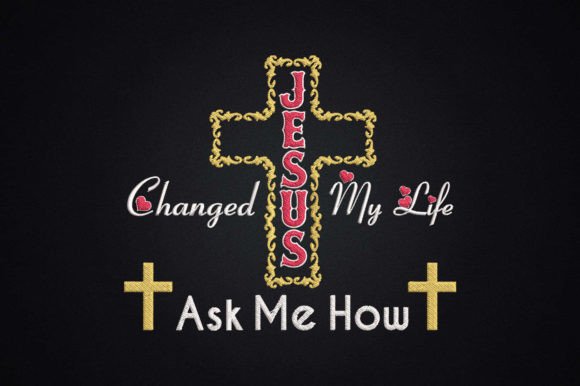
Jesus Changed My Life Ask Me How
When I first opened Jesus Changed My Life Ask Me How as a machine embroidery design, I knew immediately this piece had serious booth power. As someone who has prepped dozens of designs for craft fair season, I look for three things: visual clarity, emotional pull, and production practicality. This digital embroidery file delivers on all three. Let me walk through what works, what needs attention, and exactly how to turn this into a bestseller for your handmade market table.
First Impression: Bold Faith Messaging That Stops Traffic
The design reads like a direct invitation. It is not subtle, and that is exactly why it works for craft fair products. Shoppers walking past a booth packed with tote bags, aprons, and tea towels need something that grabs their eye within two seconds. Jesus Changed My Life Ask Me How does that. It feels confident, warm, and conversational. The message is complete in one glance, which matters when a customer is scanning a table from five feet away.
This is not a tiny accent piece. It wants to be seen. In my judgment, this design lands in the bold and faith-driven category. It has a modern testimonial feel rather than a rustic farmhouse or ornate decorative style. That makes it versatile for both everyday wear and giftable handmade items.
Best Product Matches for Your Craft Fair Booth
After testing this design mentally against my usual booth lineup, here is where I see the strongest performance:
Tote Bags and Market Bags
A sturdy cotton tote with Jesus Changed My Life Ask Me How centered on the front panel becomes a walking billboard. It works for church craft fairs, community markets, and even casual boutique settings. The design is large enough to fill the space without looking sparse. I would use a midweight canvas or cotton twill to hold the stitch density cleanly.
Apron Embroidery
Aprons at craft fairs sell well because they feel practical and giftable. This design on an apron front pocket or chest panel gives the wearer a conversation starter. I have seen similar faith-based aprons move quickly at holiday markets. The key is keeping the embroidery centered and not too low on the apron body.
Tea Towel Embroidery
Tea towels are a staple for any handmade market booth. Jesus Changed My Life Ask Me How works beautifully as a centered design on a linen or cotton tea towel. Because the text is the entire message, it reads clearly even when folded on a display rack. Customers pick it up, read it, and either smile or start a conversation.
Embroidered Patches
Patches are a low-cost, high-margin product. Stitching this design as a patch and offering it both sewn onto bags and as a separate iron-on option gives customers flexibility. A patch format also lets you test the design without committing to full production runs on larger items.
Caps and Curved Surfaces
Baseball caps are tricky, but this design is straightforward enough to fit a cap front panel. The text layout does not appear overly complex, which helps on curved surfaces. I would test a sample on a cap before taking a batch to market. Small lettering and tight curves can cause registration issues if the stabilizer is not matched correctly.
Pillow Covers and Home Decor
A toss pillow with this design on the front panel makes a strong faith-based home accent. It works in a booth display as a vertical element among tabletop products. Plus, pillow covers are easy to batch produce. Just ensure the fabric is stable and the hoop size accommodates the full design without distortion.
Production Notes: What Every Embroidery Business Owner Must Check
Before you stitch out fifty pieces, there are practical points to verify. This applies whether you sell on Etsy, at local markets, or through a commercial embroidery setup.
Stitch Density and Fabric Texture
Because the design is text-heavy, stitch density matters. Dense stitching on thick fabrics like canvas or terry can cause puckering. On the other hand, lightweight fabric may show shadowing behind the lettering. Test on scrap fabric first. Use a medium-weight cutaway stabilizer for bags and towels, and a tear-away for patches if the fabric is stable. Always check the actual stitch count and density in your software before committing to a run.
Thread Colors and Contrast
This design likely uses black, white, or a single bold color. Contrast is everything. A white design on dark fabric reads loud and clear. A metallic or bright thread color can elevate the look for premium products. I recommend stitching at least one real mockup on the exact fabric you plan to sell. Compare thread colors physically against the fabric under booth lighting.
Hoop Size and Design Scale
You need to confirm the hoop size required for Jesus Changed My Life Ask Me How. If the design is wider than your largest hoop, you cannot scale it down without losing detail. Small lettering shrinks fast. If the design has thin script or tiny details, it will blur at smaller sizes. Always review the design dimensions in your embroidery software and test a reduced scale if you want it on caps or small pouches.
Small Lettering and Detail Retention
Faith-based designs often include fine text. If the lettering is small, it may not stitch cleanly on textured towels or thick fabrics. For tea towels, use a lightweight stabilizer and a sharp needle. For dark fabrics, ensure the thread opacity is high enough that the message remains legible from a distance. Nothing kills a sale faster than a design that looks messy up close.
Booth Display Strength and Customer Engagement
One of the strongest selling points of this design is its question format. Jesus Changed My Life Ask Me How invites interaction. In a booth setting, that is gold. Customers read it, pause, and sometimes ask the maker about the meaning. That opens a conversation that can lead to a sale. I have seen similar faith-based designs create a warm atmosphere around a table, making shoppers feel welcome rather than rushed.
Display this design on a central tote bag or apron at eye level. Pair it with a simple sign that repeats the message. Keep the rest of your booth clean and uncluttered so the design stands out. If you sell online, use a printable mockup that shows the design on a lifestyle photo. A mockup of a tote bag held by a person or styled on a chair helps Etsy customers imagine owning it.
Photography and Etsy Listing Tips
For online sales, photograph the finished product in natural light. Capture a close-up of the embroidery so buyers can see the stitch quality. Show the design on at least two different products, such as a tote bag and a tea towel. Use lifestyle shots that convey the faith-based message without being overly staged. List the design assets and file formats clearly, and note that Jesus Changed My Life Ask Me How comes with multiple embroidery file formats for different machines. Always confirm commercial licensing terms before selling finished products.
Batch Production and Repeatability
This design strikes me as highly repeatable. Because it is text-based and likely uses few thread colors, you can set up a production line efficiently. Load your hoop, stitch out several pieces in a row, and maintain consistency. The design does not rely on complex gradients or dense fill patterns that slow down production. For a craft fair seller, that means you can produce a solid inventory in a weekend.
However, do not skip the test stitch. Stitch one sample on each fabric type you plan to use. Check for thread breaks, registration shifts, and fabric distortion. Adjust tension and stabilizer as needed. A single test run saves hours of rework later.
Final Verdict from an Experienced Designer
Jesus Changed My Life Ask Me How is a strong addition to any faith-based product line. It reads clearly, engages customers, and adapts well across tote bags, aprons, tea towels, patches, caps, and home decor. It is not a subtle design, and that is its biggest advantage in a busy craft fair booth. Shoppers notice it, read it, and remember it. That is exactly what you want from a machine embroidery design when you are trying to move handmade product at a weekend market.
Before you start production, verify the stitch count, hoop size, and file format compatibility. Test on scrap fabric. Check thread contrast against your chosen fabric color. Create at least one real mockup for your booth display and online listings. Confirm that your commercial embroidery license covers selling finished products. If those boxes are checked, this design deserves a spot on your craft fair table. It will earn its place through visual pull, clear messaging, and the kind of customer conversation that turns a browser into a buyer.