Jesus Saved My Life Embroidery Design for Business
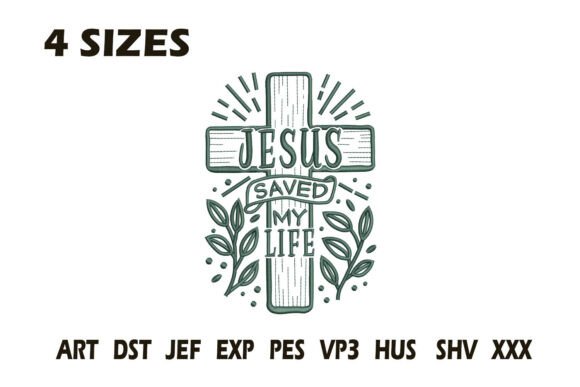
When I review a machine embroidery design for small business merch, I focus on how it will perform under real production conditions and how it will shape a brand’s identity. The Jesus Saved My Life Embroidery Design, listed under the Religion Faith category, sits at a unique intersection of deep personal testimony and playful, whimsical aesthetics. Described as charming and fun, this isn’t your standard gothic script or formal religious crest. It feels friendly, modern, and deeply handmade. For the business owner or apparel decorator, this opens up a wider audience—people who want to display their faith in a lighthearted, approachable way. Let’s evaluate this embroidery file from the lens of commercial viability, patch production, and brand building.
First Look: How Playful Embroidery Serves Faith-Based Brands
My first impression of this design is that it leans heavily into approachability. The word “playful” in its description signals soft curves, organic spacing, and a decorative flow. For a florist, a cozy café, or a handmade boutique, this vibe is gold. It suggests the brand is not just selling products but sharing a story with a warm tone.
However, there is a trade-off. A whimsical design needs to retain readability when reduced down to a small patch size or a cap front. As an experienced digitizer, I immediately examine the loop sizes and narrow spaces. If the charm comes from thin strokes or delicate flourishes, those elements can disappear at 2 inches wide. Before you commit to production, pull the digital embroidery file into your software and check its proportions at your intended hoop size. The cute factor must survive the scaling process to protect the clarity of the message.
From Patch to Polo: Practical Applications for Your Merch
This design is remarkably versatile when applied to the right substrates. Here are three strong paths for small business use:
- Embroidered Patches for Uniforms and Bags: Creating an embroidered patch is my first recommendation. It allows you to sew the design onto aprons, denim jackets, canvas totes, or work shirts without committing the entire garment. A café or bakery can offer staff aprons with a Jesus Saved My Life patch as a subtle statement. Since patches are removable, the employee can transfer it between uniforms. The whimsical charm keeps the patch feeling like a boutique accessory rather than a strict uniform mandate.
- Chest Logo for Custom Apparel: For a creative studio or faith-driven handmade brand, this works beautifully as a left chest logo on tees or sweatshirts. The “fun” tone makes it less intimidating than a larger layout. It sits naturally where a premium logo would go. Pair it with good thread colors—soft white on navy, or a rich clay on cream—to elevate the finished product.
- Tote Bag Design and Customer Gifts: Tote bags are walking billboards. This design, with its charming whimsy, turns a simple canvas tote into a gift item or strongly branded merch. Florists and gift shops can feature it on linen bags filled with small goods. It adds a high perceived value because the machine embroidery feels permanent and quality-driven compared to screen printing.
Each of these applications relies on the design holding its personality at production size. If the file includes decorative elements, verify they do not distort on textured fabric like heavy canvas or terry cloth for towel embroidery.
Digitizing Deep Dive: Stitch Density, Hoop Size, and Fabric
Here is where the rubber meets the road. The Jesus Saved My Life Embroidery Design is described as playful, which often translates to flowing satin stitches and variable widths. From a technical standpoint, I evaluate several factors before putting it into production:
- Stitch Density: Whimsical designs can inadvertently become dense if curves overlap tightly. High stitch density on a lightweight t-shirt can cause puckering. For such fabrics, you will need a firm cut-away stabilizer. For apron embroidery or patches, a heavier tear-away might suffice, but always test. If the design is too dense, ask your digitizer if they can reduce the fill while keeping the shape intact.
- Hoop Size and Cap Embroidery: Caps are the hardest surface for playful scripts. The curve of a cap front distorts tall lettering. If you plan to put this on caps, test it in a 5x7 hoop or a dedicated cap frame. Ensure the whimsical flourishes don’t pull to one side. A common fix is to slightly widen the spacing and reduce the height.
- Thread Colors and Contrast: This phrase carries emotional weight. It needs to be read instantly. For dark uniforms, use bright white, gold, or a high-contrast neon. For lighter fabrics, deep navy, charcoal, or burgundy give it a premium, rustic feel. I always recommend testing the embroidery file in black and white first. This lets you see the texture and spacing without the distraction of color. It reveals gaps, poor connections, or areas where the design might not sew out cleanly.
- Fabric Texture: Terries and fleeces can swallow delicate stitch details. If the design has thin, playful strokes, they may sink into the fabric pile. Use a water-soluble topper on towels and fleece to keep the stitches visible and sharp.
Building Brand Trust with Quality Machine Embroidery
In the Religion Faith market, customers are looking for items that feel genuinely crafted and respectful of their beliefs. The Jesus Saved My Life Embroidery Design helps build a brand identity that is personal, trustworthy, and stylized. A well-stitched embroidered patch or apron design signals that the business cares about details. It moves the product from a generic item to a handmade product with emotional resonance.
However, the opposite is also true. If the design is poorly digitized or rushed through production—resulting in skipped stitches or crooked text—it damages customer trust. The whimsical charm that makes this design special can turn into a messy liability if the stitch density is off or the stabilizer is wrong. For small business owners, the first batch of merch should be treated as a portfolio piece. Create a printable mockup using the digital embroidery file to show customers exactly how the finished product will look. This builds confidence and reduces returns.
Production Ready: A Checklist for Embroidery Shops
Before you finalize this design for your small business line, run through this practical checklist:
- Verify Commercial Licensing: Confirm that the machine embroidery design file you purchased allows you to sell the finished products (aprons, patches, totes). Licensing terms vary between designers.
- Test on Exact Fabric: Do not guess. Hoop a swatch of your actual garment or patch material. Use the recommended stabilizer and backing.
- Create a Mockup: Use the embroidery file to generate a mockup for client approval or for your Etsy listing. It helps visualize the hoop size and placement on a cap or chest.
- Check for Push/Pull Compensation: Whimsical scripts often need slight adjustments in the digitizing to prevent gaps between satin columns. If you see gaps in your test sew, the file may need editing.
- Assess Wash Durability: If this design goes on staff uniforms or towels, run a wash test. Check for thread breaks, fraying, or distortion. Use a good quality thread and ensure the design has proper underlay.
- Plan Your Design Assets: If you are building a collection, consider pairing this phrase with a simple icon—a cross, a leaf, or a heart—to create a cohesive branded set.
In the end, the Jesus Saved My Life Embroidery Design offers strong potential for commercial embroidery when handled with care. Its playful nature is a strategic advantage for businesses wanting to connect with customers on a genuine, faith-based level without feeling overly formal. Test your materials, trust your stabilizer, and let the charm of the stitching speak for your brand.