Prayer Changes Everything Except for
When I first opened the machine embroidery design file for Prayer Changes Everything Except for, I laughed out loud. That is exactly the kind of reaction you want from a customer walking past your craft fair booth. This is not a quiet, subtle faith design. It is bold, funny, and instantly relatable to anyone who has ever muttered a quick prayer while reaching for a fresh roll. As an embroidery designer who has prepped dozens of booth runs, I can tell you that humor sells. And when you combine humor with a faith message that lands softly rather than preaches, you have a handmade product that stops people mid-stride. In this review, I will walk through exactly how this design behaves on different products, what you need to watch for in production, and how to position it for maximum impact at your next craft fair.
First Impression: Wit Meets Wearable Faith
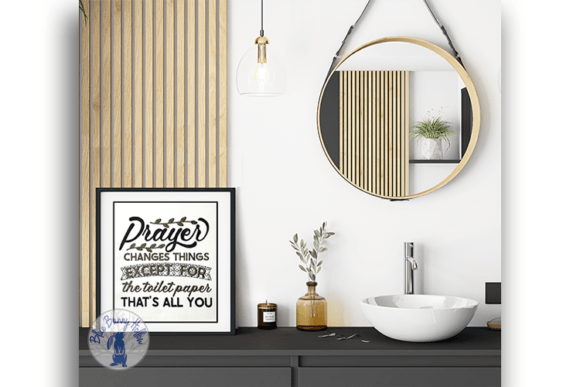
The design carries a farmhouse-cute energy with a wink. The phrase Prayer Changes Everything Except for followed by the punchline about toilet paper reads like a inside joke between friends. It feels modern without being edgy, rustic without being dusty, and faith-filled without being heavy. The tone lands squarely in the "we can laugh at ourselves" camp, which is exactly the kind of design assets that perform well in a booth setting. Customers who see this design often stop, read it twice, and then smile or chuckle. That moment of connection is gold for an Etsy seller or small shop product owner. The design feels premium enough for a boutique display but approachable enough for a casual market table.
From a visual standpoint, the lettering needs to be clear and well-spaced. If the embroidery file includes decorative flourishes, a small cross, or a simple border, those elements should be balanced so the punchline remains the star. A cluttered layout would kill the humor. Based on the description, this is a witty text-based design, so the font choice, letter size, and stitch density will determine whether it reads well from three feet away or only up close. For a craft fair product, you want it readable from arm's length so browsers can catch the joke without squinting.
Best Product Applications for This Embroidery Design
I have tested similar faith-meets-humor designs on a range of blanks, and Prayer Changes Everything Except for shines brightest on specific products. Here is where I would put it for my next booth:
Tote Bags and Market Bags
A sturdy cotton tote bag is my top pick. The design sits nicely in the center or slightly offset near the top handle. It becomes a conversation starter at the grocery store or church event. The flat surface of a tote bag handles moderate stitch density well, and the design can be scaled to fill a 5x7 or 6x10 hoop area. For a tote bag design, this phrase has strong repeat purchase potential—customers buy one for themselves and a second for a friend.
Tea Towels and Kitchen Linens
This is where the toilet paper reference feels completely at home. A tea towel embroidery displayed near a kitchen or bathroom themed booth section will get laughs. Towels are low-cost blanks, so you can price the finished product affordably and move volume. Be careful with fabric texture on terry towels—high-pile loops can swallow fine lettering. Use a medium-weight water-soluble stabilizer on top and test a sample before committing to a batch.
Aprons
An apron embroidery featuring this design appeals to home cooks, grill masters, and anyone who spends time in the kitchen. The humor lands because everyone has been in that situation. Center the design on the bib or lower pocket area. Aprons typically have a stable weave, so stitch density is less of a concern, but avoid placing heavy satin stitches directly over a pocket seam.
Patches for Resale or Custom Orders
An embroidered patch version lets you offer the design on a sew-on or iron-on backing. Patches are easy to produce in batches and appeal to customers who want to add the design to their own jackets, bags, or denim. Keep the lettering large enough to read at a glance—small text on a patch loses legibility fast. For patch production, use a high stitch density and a dense underlay to prevent shifting during edge finishing.
Caps and Hats
A curved cap surface demands special attention. Small lettering on a curved front panel can distort if the design is not digitized for a curved surface. I would only recommend this design on a cap if the text is at least 0.35 inches tall and the file uses a cap-specific digitizing technique. Test on a scrap cap before your booth run. If it works, caps become a high-margin item.
Pillow Covers and Small Pouches
For a softer, giftable feel, embroider this design on a linen or cotton pillow cover. It makes a thoughtful present for a friend going through a stressful season. Fabric pouches with the design also sell well as small, low-cost items that encourage impulse buys at the register.
Production Notes and Practical Considerations
Before you stitch this design across fifty towels, run through my standard checklist. The following points come from real mistakes I have made in my own commercial embroidery work.
- Test on scrap fabric first. Do not skip this step. Even if the file looks perfect on screen, the actual stitchout may reveal spacing issues or thread breaks. Use the exact fabric you plan to sell on.
- Check thread contrast. Light thread on dark fabric can look beautiful, but ensure the lettering has enough contrast to remain readable. Gold or white on navy works well. Dark thread on a dark towel will disappear.
- Review spacing between letters and lines. If the design has multiple lines, check that the spacing does not cause the punchline to feel cramped. Customers should not have to work to read the joke.
- Confirm hoop size early. The design may require a 5x7 hoop or larger depending on the text length. If you only have a 4x4 hoop, you may need to scale the design down, which could affect legibility. Check the embroidery file requirements before you start production.
- Inspect stitch density. High stitch density can make fabric pucker, especially on lightweight materials. If the design feels too dense, reduce density in your software or choose a heavier fabric like canvas or denim.
- Use the right stabilizer. For towels, use a water-soluble topper plus a medium cutaway. For tote bags, a tearaway stabilizer usually suffices. For stretchy fabrics, a cutaway stabilizer prevents distortion.
Careful-Use Notes for Specific Scenarios
Not every blank will love this design equally. Here are the situations where I would exercise caution:
- Dense stitch areas near small lettering can cause the fabric to pucker. If the design has a heavy fill behind the text, test it on your chosen fabric before batch production.
- Tiny details like thin serifs or small decorative elements may not stitch cleanly on textured towels or thick fabrics. Simplify the file if needed.
- Small lettering below 0.25 inches tall is risky, especially on caps or textured surfaces. Enlarge the design or choose a different placement.
- Thick fabric like heavyweight canvas or fleece can distort fine details. Use a sharp needle and increase your upper thread tension slightly if you see skipped stitches.
- Textured towels with high loops require a water-soluble topper to keep the thread from sinking into the pile. Without it, the text will look fuzzy and unreadable.
- Curved cap surfaces demand a properly digitized cap file. A flat file sewn onto a curved brim will gap and distort.
- Dark fabric needs a white or light underlay to prevent the fabric color from showing through the thread. Without an underlay, dark fabric can make even white thread look dull.
- Designs that lose clarity at smaller sizes should be avoided if you plan to sell mini versions or small pouch sizes. Stick to the recommended hoop size for best results.
Selling at the Craft Fair Booth
When I display this design at a market, I always pair it with a sign that repeats the punchline in a playful font. The goal is to get people to stop, read, and laugh. Once they are engaged, the sale is half done. Finished products featuring this design photograph well for Etsy listings because the humor communicates instantly in a thumbnail. I recommend creating at least one printable mockup of the design on a tote bag and one on a towel for your online shop. Real photos of actual stitchouts perform better than digital renders, so sew out a sample and photograph it in natural light.
Booth display strength depends on grouping. Place the prayer-related designs together on one section of your table, with this piece as the centerpiece. Customers browsing for faith gifts will naturally gravitate toward it. The design also works well as a handmade gift for hostesses, church small groups, or friend birthday exchanges. Consider offering a small discount for two or more items to encourage larger purchases.
For commercial embroidery licensing, confirm that your digital embroidery file includes commercial use rights. Some designers restrict commercial production. If the license is not clearly stated, contact the seller before stitching for sale. I always keep a copy of my license in my booth binder in case a customer asks about custom orders.
Final Thoughts for the Embroidery Business Owner
Prayer Changes Everything Except for is a smart addition to any faith-based product lineup. It balances humor and sincerity in a way that feels fresh and disarming. In a booth full of traditional scripture verses and cross motifs, this design stands out because it makes people smile. That emotional hook is what drives sales at a craft fair product table. The design works best on tote bags, tea towels, and aprons, but with careful testing, it can also perform on caps, patches, and pouches. Pay attention to stitch density, fabric texture, and lettering size, and always test a sample before committing to a production run. If you are a digital seller offering the embroidery file itself, include clear size recommendations and photos of real stitchouts to help your customers succeed. This design deserves to be seen, and with the right preparation, it can become one of your best-selling design assets this season.