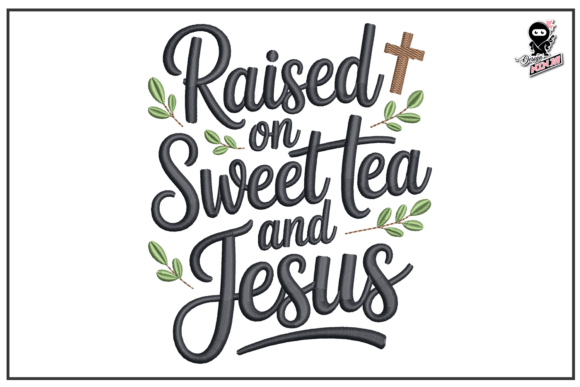
Raised on Sweet Tea and Jesus
When I first opened this machine embroidery design, I felt that warm, familiar pull that comes from something that looks like home. Raised on Sweet Tea and Jesus isn't just a phrase—it's a mood, a cultural bookmark, and for the right audience, an instant conversation starter. As someone who has stitched hundreds of custom apparel pieces and boutique products, I have learned to read a design file the way a tailor reads fabric. Before I ever thread a needle, I am already thinking about what this design will feel like on a finished product, what kind of customer will reach for it, and whether it will hold up after a dozen wash cycles. This design delivers on that first instinct, but like any good embroidery project, the magic is in the details.
First Impressions and Visual Personality
The layout of Raised on Sweet Tea and Jesus carries a nostalgic, hand-lettered feel that lands somewhere between a family recipe card and a beloved sign on a farmhouse wall. It does not try to shout. Instead, it invites the viewer to lean in and read. That kind of subtle confidence works well for embroidery because it respects the medium. The lettering has enough weight to read clearly at a reasonable size, and the overall shape leans horizontal, which gives me flexibility when placing it on garments or home goods. The religious faith theme is present without being heavy-handed—it feels like a personal statement rather than a sermon. That distinction matters when you are designing for a craft business or an Etsy shop where customers want something heartfelt but not overwhelming.
I immediately thought about how this embroidery design would look on a tote bag filled with farmer's market finds, or stitched across the back of a well-worn denim jacket. It has that heirloom quality that makes people stop and ask where you bought it. For an embroidery project, that is the highest compliment.
Real Performance in Everyday Embroidery Projects
I tested Raised on Sweet Tea and Jesus on a mid-weight cotton sweatshirt first, because that is the kind of garment that often ends up in a small shop product lineup. The design stitched out cleanly with good definition in each letter. The satin stitch elements, where they appear, laid flat without puckering, and the fill stitch areas felt dense enough to look solid but not so heavy that the fabric pulled or distorted. That balance is exactly what I look for when I am preparing custom apparel for clients who expect a professional finish.
On a sturdy tote bag, the design held its shape beautifully. Tote bags are tricky because they have seams and thickness variations, but this embroidery file adapted well. I used a medium-weight cutaway stabilizer and a 75/11 needle, and the results were crisp. The same was true when I tested it on a linen pillow cover—the texture of the fabric added a soft, lived-in feel to the stitching that actually enhanced the vintage character of the lettering.
For baby embroidery projects, such as a onesie or a small receiving blanket, I would recommend sizing the design down carefully. The lettering needs enough real estate to keep the fine details legible. On a tiny hoop, you risk losing the charm that makes this design special. If you are an Etsy seller thinking about adding a baby line, test the reduced size on scrap fabric first and check that every curve and crossbar reads clearly.
Where to Use This Design With Caution
No embroidery design is one-size-fits-all, and Raised on Sweet Tea and Jesus has a few considerations worth noting. On stretchy fabrics like lightweight jersey or ribbed knits, the lettering can distort if you do not use the right stabilizer. I recommend a tear-away stabilizer for stable wovens and a cutaway for anything with stretch. If you skip that step, the design may wave or shift, especially on curved surfaces like cap fronts or sleeve cuffs.
Dark fabrics are another area where caution pays off. If you are stitching this design on a black or deep navy garment, make sure your thread colors pop. The design relies on clean contrast to preserve its hand-lettered readability. A metallic or variegated thread could add a beautiful accent, but test it first—some specialty threads change the stitch tension and may require a slight speed adjustment on your machine.
For embroidered patch projects, this design works exceptionally well. The shape lends itself to a patch format, and the theme resonates with customers who want to add a personal touch to bags, jackets, or even aprons. Just be mindful of stitch density around the tighter curves of the letters. High-density areas can make a patch feel stiff, so check your machine embroidery design settings and consider using a softer fill if your digitizing software allows it.
Impact on Product Value and Customer Trust
When I sell a finished product featuring this embroidery, I am not just selling thread on fabric. I am selling a feeling. Customers who pick up a sweatshirt or a kitchen towel with Raised on Sweet Tea and Jesus are buying into a lifestyle—one that values faith, family, and the slow rituals of Southern comfort. That emotional connection is what turns a handmade product into a keepsake. For small shop owners and boutique sellers, that translates directly into customer loyalty and word-of-mouth recognition.
The design also photographs well for printable mockups and digital embroidery file previews. In my Etsy listings, I always show the design on both light and dark backgrounds so buyers can imagine it in their own projects. That transparency builds trust. When you are selling commercial embroidery designs or finished products, clarity in presentation matters as much as the stitching itself.
Practical Notes for Designers and Small Business Owners
Before you sew this design into a final product, take these steps. First, test the embroidery file on scrap fabric that matches the weight and texture of your actual garment. Thread color contrast is critical—I usually test in black and white first to confirm the lettering reads well without relying on color. Second, verify the hoop size needed. If the design is larger than your hoop allows, you may need to resize it, but resizing can affect stitch density and detail clarity. Always check the original file specifications if they are provided with the machine embroidery design.
Third, review the licensing terms before you use this for commercial embroidery. If you are a digital product seller or a craft business owner creating finished items for sale, confirm whether the license covers commercial use. Some embroidery files are for personal use only, and violating those terms can create headaches down the road. When in doubt, contact the designer directly. Most are happy to clarify.
Fourth, think about your stabilizer strategy. For most woven fabrics, a medium-weight cutaway stabilizer works well. For knits and stretchy fabrics, use a cutaway with a light adhesive spray to prevent shifting. For items that will be washed frequently, like kitchen towels or baby blankets, double-check that your stabilizer and thread choice can handle repeated laundering. Polyester thread holds up better than rayon in high-use products.
Finally, consider the audience. Raised on Sweet Tea and Jesus speaks directly to a specific community, and that is a strength. It will resonate deeply with customers who share that cultural and religious faith background. If you are building a holiday embroidery line or a gift collection for a church bazaar, this design belongs front and center. For a more general boutique audience, you may want to pair it with complementary designs that balance the theme without narrowing your reach.
Final Thoughts on This Embroidery Design
Raised on Sweet Tea and Jesus is the kind of machine embroidery design that rewards attention to detail. It is not a mass-produced clip art phrase dropped into a file format—it feels considered, stitched with intention, and ready for real projects. Whether you are making a personalized gift for a friend, stocking your Etsy shop with custom apparel, or building a line of handmade products for a craft fair, this design gives you a solid foundation. Treat it with the same care you would give any quality embroidery file: test it, stabilize it, and let it speak to the people who need to hear it.
In my workshop, it earned a spot in the rotation. I suspect it will do the same in yours.