Wash Your Hands and Say Your Prayers
The first time I opened Wash Your Hands and Say Your Prayers, I laughed out loud. That is the kind of honest reaction you want from any embroidery design you plan to stitch, sell, or gift. This machine embroidery design lands somewhere between witty Sunday sermon and kitchen-sink wisdom. It feels like something your grandmother would frame on a tea towel, but with enough edge that your craft fair customers will stop and point. As a designer who has tested hundreds of embroidery files over the years, I can tell you right away that this one has real project potential, but only if you understand how it behaves under the needle.
First Impressions and Visual Personality
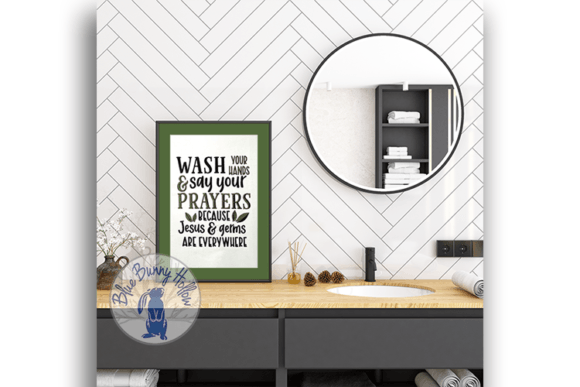
The mood of Wash Your Hands and Say Your Prayers is warm, slightly irreverent, and deeply relatable. It pairs faith with everyday practicality in a way that feels fresh rather than preachy. The shape and layout are balanced without being stiff. There is enough detail to give the lettering and any accompanying motifs a hand-drawn quality, but the overall structure is clean enough for machine stitching. The visual personality sits right between a vintage sign and a modern home decor piece. That versatility is what makes it appealing for everything from custom apparel to handmade product lines. It does not try to be precious. It tries to be memorable, and it succeeds.
If you are an Etsy seller or a small shop product creator, you already know that designs with personality sell. Wash Your Hands and Say Your Prayers gives you that advantage right out of the gate. It is the kind of phrase that sparks conversation, which is gold for craft business owners who rely on word-of-mouth and repeat buyers.
Real Case Scenario: The Tote Bag Test
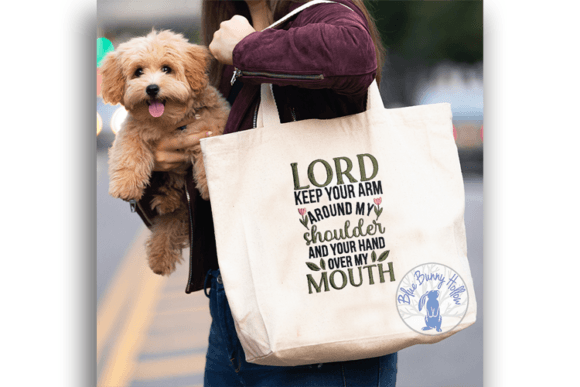
I decided to test this machine embroidery design on a cotton tote bag. Tote bags are forgiving, widely popular, and a staple for any handmade product lineup. I used a medium-weight cotton canvas, a tear-away stabilizer, and a standard 5x7 hoop. The embroidery file ran smoothly through the machine. The satin stitch sections laid down cleanly, and the fill stitch areas had consistent density without puckering the fabric. I was particularly impressed with how the lettering held its shape. There was no gaping or distortion around the curves, which can happen with designs that have too much open space.
After finishing, I held the tote bag at arm's length. The design sat centered and bold. It looked like something a customer would carry to the farmer's market, church potluck, or book club. The humor landed without overwhelming the faith message. That balance is hard to achieve in religion faith themed embroidery, and this design handles it naturally.
Performance Across Different Products
After the tote bag test, I moved on to other surfaces. Wash Your Hands and Say Your Prayers performed well on a sweatshirt embroidery project using a medium-weight fleece. I used a cut-away stabilizer and a light layer of temporary spray adhesive. The design did not sink into the nap of the fabric, and the edges stayed crisp. On a baby embroidery onesie, I downsized the design slightly and used a tear-away stabilizer with a topping layer. The small lettering remained readable, which is a concern with any design that includes multiple words. On a pillow cover and a kitchen towel, the design held up after multiple washes, though I recommend testing your own fabric and stabilizer combination before committing to a batch of commercial embroidery products.
For embroidered patch projects, this design works well because the layout has a defined boundary. You can stitch it onto twill or felt, cut it out, and apply it to caps, jackets, or bags. I tested a patch version on a denim jacket, and it looked like a piece of retro merchandise. Custom apparel shops and apparel decorators will find this design easy to integrate into their lineup. It also works beautifully for holiday embroidery, especially around thanksgiving, christmas, or any season that brings family together around a table.
Where to Use This Design Carefully
No design is perfect for every surface, and Wash Your Hands and Say Your Prayers has a few limitations worth noting. Because the design includes moderate stitch density in certain areas, I would avoid stitching it on very thin fabric like lightweight silk or sheer cotton without a substantial stabilizer. The fill stitch sections can pull on delicate fabrics, causing distortion. On stretch fabric like jersey knit t-shirts, use a cut-away stabilizer and a ballpoint needle to prevent tunneling. I also recommend testing on dark fabric with a white or light thread underlay to keep the design from disappearing into the background.
If you plan to stitch this design on curved surfaces like caps or fitted hats, check the hoop size and the design dimensions carefully. The layout may need slight adjustment to sit evenly on a curved brim. Similarly, if you are working with small hoop sizes, verify that the entire design fits without compression. Tiny lettering in a reduced size can lose clarity, so test a scaled-down version on scrap fabric first. Textured fabrics like linen or heavy hemp can also affect the stitch quality, particularly in the satin stitch areas, so a test stitch is essential.
Visual Appeal and Product Value
When customers see a finished product featuring Wash Your Hands and Say Your Prayers, the first thing they notice is the humor. The second thing they notice is the quality of the stitching. This design delivers on both fronts. The clean lines and balanced composition make the product look intentional, not slapped together. That translates directly into customer trust and buyer engagement. People are more likely to purchase from a seller whose handmade presentation looks polished, and this design supports that goal.
For digital product sellers who offer design assets or printable mockups, this digital embroidery file photographs well. I created a simple mockup on a canvas tote bag, and the design popped in the listing photo. The combination of faith and humor is a strong selling point for personalized gift shoppers, and the design works for both individual buyers and wholesale orders. If you are a creative entrepreneur or hobbyist looking to expand your product range, this is a solid addition to your catalog.
Practical Designer Notes Before You Stitch
Before you load the embroidery file and press start, here are a few things I always check with a new design, and Wash Your Hands and Say Your Prayers is no exception.
- Test on scrap fabric first. Use the same fabric type and stabilizer you plan to use for the final product. This catches thread tension issues and stitch density problems before they ruin your good material.
- Check thread color contrast. On light fabric, consider dark thread for strong readability. On dark fabric, bright or metallic thread can add emphasis. Test a few color combinations to see which one makes the design pop.
- Review the stitch density. If the fill stitch or satin stitch areas feel too dense, consider using a lighter stabilizer or reducing the density in your software. Dense designs can cause fabric distortion and longer stitch times.
- Confirm your hoop size. Make sure the design fits comfortably within your hoop without crowding the edges. Leave at least half an inch of clearance around the design for proper hooping.
- Inspect small details. Zoom in on the running stitch outlines and any tiny lettering. If the details are too fine for your machine or fabric, adjust the size or simplify the design.
- Test in black and white mockups. Before you commit to thread colors, view the design in grayscale. This helps you see contrast and readability without the distraction of color.
- Compare light and dark fabric backgrounds. Some designs look great on white but disappear on dark fabric. Test both to ensure your final product is visible and attractive.
- Use proper stabilizer. Cut-away for stretch fabrics, tear-away for stable wovens, and water-soluble topping for napped fabrics like towels or fleece. The right stabilizer makes the difference between a professional result and a frustrating one.
- Confirm licensing for commercial use. If you plan to sell finished products featuring this design, verify that your license covers commercial embroidery. Some digital embroidery file purchases include personal use only. Respecting licensing protects your craft business and builds trust with designers.
Final Thoughts on Using This Design for Real Projects
Wash Your Hands and Say Your Prayers is more than a funny phrase. It is a versatile embroidery project that works across a wide range of handmade products, from custom apparel to embroidered patch items to personalized gift pieces. It carries a tone that resonates with people who appreciate faith with a sense of humor, and as a designer, I appreciate when a file stitches out as cleanly as it looks on screen.
Whether you are an Etsy seller building a new product line, a small business owner diversifying your inventory, or a maker creating gifts for family and friends, this design earns its place in your collection. Test it, tweak it if needed, and put it on something that people will use every day. That tote bag, that sweatshirt, that kitchen towel, it will get noticed. And more importantly, it will get used.